

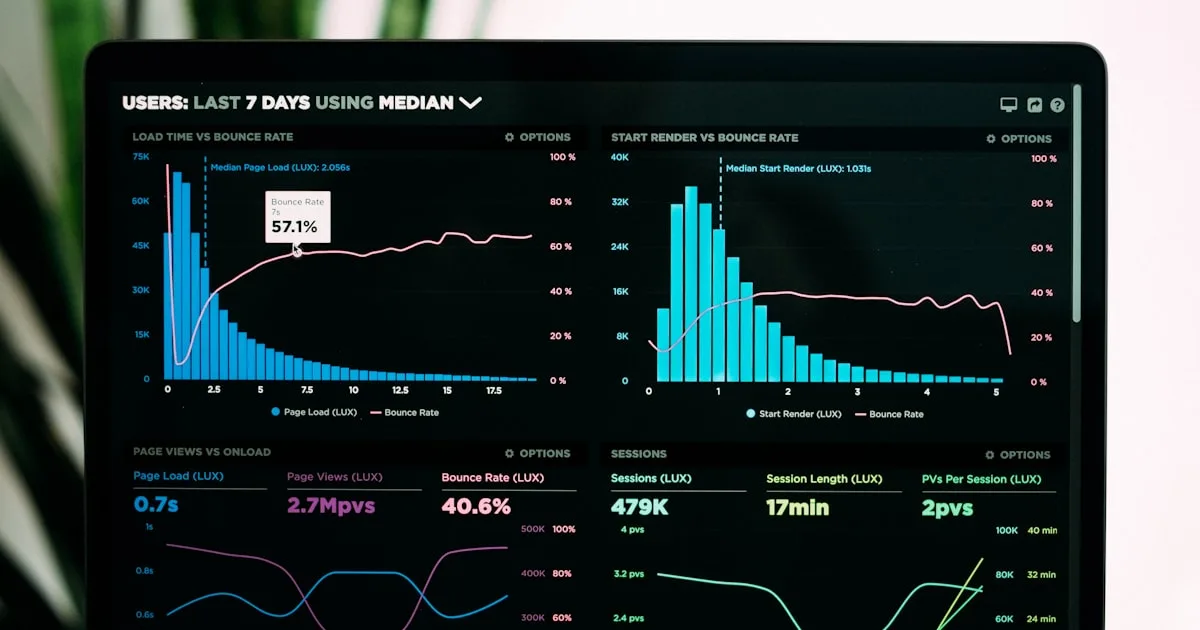
A client showed me their traffic dashboard last spring. Rankings were healthy — page one for most of their money terms, a few featured snippets, the kind of profile that would have been a clear win three years ago. Clicks were down 40% year over year.
Nothing had gone wrong with their SEO — everything had gone wrong with the channel underneath it. Something had gone wrong with the assumption underneath it: that ranking well and getting traffic are the same thing. They aren’t anymore, and generative engine optimization is the discipline that grew up around that gap.
This guide covers what generative engine optimization actually is, the data behind why it matters now, and nine tactics that move citation rates. I’ll also tell you which parts of it I think are overhyped, because there’s a lot of vendor noise in this space right now.
In this guide:
- What Generative Engine Optimization Actually Is
- The Numbers That Make the Case
- How AI Engines Pick Sources (and Why It’s Not Ranking)
- 9 Generative Engine Optimization Tactics That Work
- How to Measure AI Visibility
- What’s Overhyped
- The Bottom Line

What Generative Engine Optimization Actually Is
Generative engine optimization is the practice of structuring content, technical setup, and brand presence so that AI systems cite you when they answer a question. The engines that matter in 2026 are ChatGPT, Perplexity, Google AI Overviews, Google’s AI Mode, Gemini, Microsoft Copilot, and Claude.
The mental shift generative engine optimization asks for is a narrowing one. Classic SEO was about earning a place in ten blue links. Generative engine optimization is about earning a place among the two to seven sources a model actually pulls into a single synthesized answer. Fewer slots, different signals, and a measurement layer that barely existed eighteen months ago.
You’ll also see this called AEO (answer engine optimization), AI SEO, or LLMO. The industry hasn’t settled on one label. They all point at the same objective.
Worth noting: the discipline started as academic work, not a marketing coinage. A team spanning Princeton, Georgia Tech, the Allen Institute and IIT Delhi formalised it in a paper presented at KDD 2024, and their experiments found that specific content changes could lift visibility in AI answers by as much as 40%.
The Numbers That Make the Case
I’m generally sceptical of vendor statistics in emerging categories, but several independent sources are converging on the same picture, which makes it harder to dismiss.
Ranking no longer predicts citation. Ahrefs found that roughly 28% of the pages ChatGPT cites most often have no organic visibility in Google at all. Analyses of citation overlap tell the same story from the other direction: the correlation between Google’s top ten and AI-cited sources has fallen from around three-quarters in mid-2025 to somewhere between a fifth and a third in early 2026, depending on whose dataset you use. That spread is wide enough to treat any single figure cautiously, but the direction is not in dispute.
Click-through collapses where AI answers appear. Seer Interactive measured a 61% drop in organic CTR on queries showing an AI Overview, and AI Overviews now appear on roughly a quarter of Google searches.
But the traffic that does arrive converts unusually well. Reported conversion rates for AI-referred visitors cluster in the 10–17% range across ChatGPT, Perplexity and Claude, against low single digits for classic organic. That makes intuitive sense — someone arriving from a cited source in a synthesized answer has already had their question partly answered and is further down the funnel.
Freshness matters more than it used to. Seer’s analysis found that the large majority of AI Overview citations come from content published within the last two years, and that recently updated pages show up several times more often than stale ones.
The practical read: you’re trading volume for quality, and the sites that treat generative engine optimization as a 2027 problem are conceding the compounding period to whoever starts now.
How AI Engines Pick Sources (and Why It’s Not Ranking)
Two mechanics explain most of generative engine optimization’s divergence from classic SEO.
Query fan-out. The model doesn’t paste your question into a search engine. It decomposes it into several narrower sub-queries and searches each independently, then assembles an answer from what comes back. Ask about the best budget GPU for local AI, and behind the scenes it may be running separate searches for VRAM requirements, current pricing, and specific card comparisons. You’re not competing for one query. You’re competing for whichever sub-queries your page can answer cleanly.
Information gain. Models are built to look for something they don’t already have. If your page restates the consensus in slightly different words, the model has no reason to cite you — it already knows that, from training. Pages that contribute a number, a test result, a date, or a specific claim the model can’t generate internally are the ones that earn a citation.
That second point is the single most useful thing to internalise. Generative engine optimization rewards content that adds information, and is close to indifferent to content that merely rewords it.
9 Generative Engine Optimization Tactics That Work
1. Check that AI crawlers can actually reach you
Start here, because it’s boring and it’s the most common generative engine optimization blocker I run into. Plenty of sites are blocking AI bots without realising it — Cloudflare shifted its default configuration to block them, which caught out a lot of people who never touched a setting.
Audit your robots.txt for GPTBot, PerplexityBot, ClaudeBot, Google-Extended and the rest. Then check your CDN separately, because the block often lives there rather than in your file. No amount of content work matters if the crawler gets a 403.
2. Front-load the answer
AI systems show strong positional bias, pulling disproportionately from the opening portion of a document. Burying your answer under 600 words of throat-clearing is a citation-killer even when the answer is excellent.
Put the direct answer in the first paragraph under each heading, then expand. This is the “bottom line up front” structure, and it also happens to be better for human readers, which is a rare case of the incentives lining up.
3. Raise your factual density
One analysis this year proposed a rough threshold — roughly one verifiable fact per 80 words — as the point where pages start getting cited reliably. Treat the exact ratio as a heuristic rather than a law, but the underlying principle holds: specific, checkable claims earn citations and generic prose doesn’t.
Concretely, that means naming versions, quoting prices with dates, giving figures, and stating who measured what. “AI coding tools have become expensive” is not citable. “Copilot’s Pro tier includes $15 in AI credits as of June 2026” is.
4. Publish original data, even small amounts
This is the highest-leverage generative engine optimization tactic on the list and the one most sites skip because it costs real effort.
You don’t need a research budget. A benchmark you ran yourself, a survey of thirty customers, a pricing comparison you compiled and dated, a test result from your own hardware — any of these are things a model cannot produce from its weights. The original GEO research found statistics addition among the strongest single interventions, and everything since has reinforced that.
5. Structure content for extraction
Clear H2/H3 hierarchies, short paragraphs, tables for comparisons, and explicit question-shaped headings all help a model pull a clean chunk out of your page. If a section can’t be lifted out and still make sense on its own, it’s hard to cite.
Schema markup helps too, though I’d rank it below structure and specificity rather than above them, contrary to what a lot of GEO vendors will tell you.
6. Earn third-party mentions
Consensus is a real generative engine optimization signal. Models weight it heavily. If several independent sources describe your product the same way, that description becomes what the model repeats. If nobody outside your own site talks about you, the model has one source and treats it accordingly.
Community forums, review sites, roundups and editorial coverage carry disproportionate weight here — precisely because they aren’t you. This is the part of generative engine optimization that looks most like old-fashioned PR and digital strategy, and it’s not automatable.
7. Build entity clarity
Entity clarity is the least discussed generative engine optimization signal. Models need to know what you are before they can recommend you. Consistent naming across your site, a clear about page, matching details on third-party profiles, and unambiguous category language all reduce the chance the model conflates you with something else or simply lacks confidence to name you.
8. Refresh on a schedule
Given how heavily recency weighs, a content calendar with no update track is leaving citations on the table. Pick your twenty most important pages and put them on a quarterly review — update figures, re-check prices, add anything new, and change the modified date honestly.
This applies to us as much as anyone. Several of our own older posts still carry 2025 in the URL and reference model versions that have since been superseded, and that’s exactly the kind of drift that costs citations.
9. Keep doing the SEO fundamentals
Google’s own documentation this year made the point plainly: optimising for its generative features is still, in Google’s framing, optimising for search. Crawlability, page speed, internal linking, and genuine topical depth all still matter. Generative engine optimization is an additional surface, not a replacement discipline, and anyone selling it as a wholesale replacement for SEO is overreaching.
A 30-Day Generative Engine Optimization Starting Plan
If the tactic list feels like a lot, here’s the sequence I’d actually run, in order, for a site starting from zero.
Week one — remove the blockers. Audit robots.txt and your CDN for AI crawler blocks. Fix anything blocking GPTBot, PerplexityBot, ClaudeBot or Google-Extended. Then pick twenty questions your customers genuinely ask and run them through four engines, logging whether you appear. That’s your baseline, and you cannot manage generative engine optimization without one.
Week two — fix structure on your top ten pages. Front-load the answer under every heading. Break walls of text into short paragraphs. Convert any comparison prose into an actual table. This is mechanical work and it’s the fastest quality lift available.
Week three — add facts. Go through the same ten pages and add specifics: dates, versions, prices, figures, named sources. Every vague sentence you can make concrete is a potential citation hook.
Week four — produce one original asset. A benchmark, a small survey, a dated pricing comparison, a test you ran. One piece of information the model cannot generate from its weights. This is the highest-effort item and the one that compounds hardest.
Then repeat the citation audit and compare. Thirty days is short for generative engine optimization results, but crawler fixes and structural changes often show up faster than people expect.
How to Measure AI Visibility
The measurement layer is the weakest part of generative engine optimization right now, and you should go in expecting that.
What you can do today for free: segment AI referrers in GA4 (chatgpt.com, perplexity.ai, and the rest) to see actual arriving traffic. Then run manual citation audits — take twenty questions your customers actually ask, run them through ChatGPT, Perplexity, Gemini and Claude monthly, and log whether you appear. It’s tedious and it’s genuinely informative.
What paid tools add: platforms like LLMrefs, Profound and similar track citation share across engines at scale. They’re useful if you’re running this seriously, and most of them are young enough that I’d trial before committing to an annual contract.
The key metric shift is from rankings to citation share: of the answers to questions in your category, what proportion mention you? That’s the number that matters now.
Generative Engine Optimization vs SEO vs AEO
The terminology confuses people, so briefly:
SEO optimises for position in a ranked list of links. The unit of success is a rank.
AEO (answer engine optimization) usually refers to earning featured snippets and direct-answer boxes — a pre-AI concept that got absorbed into the current conversation.
Generative engine optimization optimises for inclusion in a synthesized answer. The unit of success is a citation.
In practice the three overlap heavily and the boundaries are argued about more than they’re useful. Google’s stated position is that optimising for its generative features is simply search optimisation, which is a reasonable framing even if it conveniently suits Google.
The one genuinely distinct thing is the measurement model. Rankings are checkable and stable; citations vary between engines, between sessions, and sometimes between two runs of the same question. Anyone promising deterministic generative engine optimization results is overselling.
What’s Overhyped
A few honest caveats about generative engine optimization, since this space is thick with people selling certainty.
The specific statistics vary widely between vendors, and many of the firms publishing them sell GEO services. Treat any single precise figure — including several I’ve cited above — as directional rather than exact.
“llms.txt” gets promoted heavily as a technical must-have. Adoption by the major engines remains limited, and I’d put it well below crawler access and content structure in priority.
And the term itself will probably not survive. Google’s position is that this is just search optimisation done for a new surface, and there’s a decent chance that in two years we’re calling all of it SEO again. That doesn’t make the tactics wrong. It does mean you should be sceptical of anyone building an entire agency positioning on the acronym.
The Bottom Line
Generative engine optimization comes down to a straightforward trade: AI engines cite sources that tell them something they don’t already know, in a structure they can extract cleanly, from domains other people talk about.
If you do three things, do these. Confirm AI crawlers can reach your site — it takes an afternoon and it’s binary. Add original data to your most important pages, because that’s what makes you citable rather than paraphrasable. And start a manual citation audit now, so that in six months you have a baseline to compare against.
The competitive window is genuinely open. Most mid-market sites haven’t started, citation authority compounds the same way domain authority did, and the cost of beginning is mostly attention rather than budget.
For related reading, see our guides to AI tools for SEO titles and descriptions, AI content creation, and writing WordPress posts with AI.