

Disclosure: this article is based on NVIDIA’s published specifications, earnings-call statements and third-party reporting. We have not used Vera Rubin hardware. Performance figures are NVIDIA’s own claims unless another source is named.
NVIDIA’s Vera Rubin platform is now in customers’ hands. NVIDIA confirmed full production on July 21, 2026, saying systems were already shipping to customers including OpenAI, and CoreWeave announced Vera Rubin rack availability for early-access cloud customers on September 30. It is the successor to Blackwell, and it is the hardware most frontier models of 2027 will be trained and served on.
The honest summary: Vera Rubin matters to most readers not as something to buy but as the reason model prices will keep falling. NVIDIA claims about 3.3 times the inference performance of the GB300 NVL72 rack it replaces. When the clouds and labs that serve models get that much more output from a rack, competition pushes per-token prices down. The timing of that effect, though, depends on how fast supply ramps, and NVIDIA itself said early volumes would not be high.
Table of Contents
- What Vera Rubin Is
- Vera Rubin Specs
- NVL144 or NVL72? The Rename Explained
- The Vera Rubin CPX Variant
- From Samples to Cloud Racks
- What Vera Rubin Means for Model Prices
- Should You Rent Vera Rubin Capacity?
- What Comes After: Rubin Ultra
- The Power and Cooling Question
- Vera Rubin and the Software Stack
- Reading the Benchmarks Sceptically
- Who Should Use What
- FAQ
- Verdict
- Sources and Further Reading

What Vera Rubin Is
Vera Rubin is NVIDIA’s data-centre platform for 2026, named after the astronomer whose work provided evidence for dark matter. It pairs two new chips. Rubin is the GPU. Vera is an 88-core Arm-based CPU. NVIDIA sells them together as rack-scale systems rather than as individual cards.
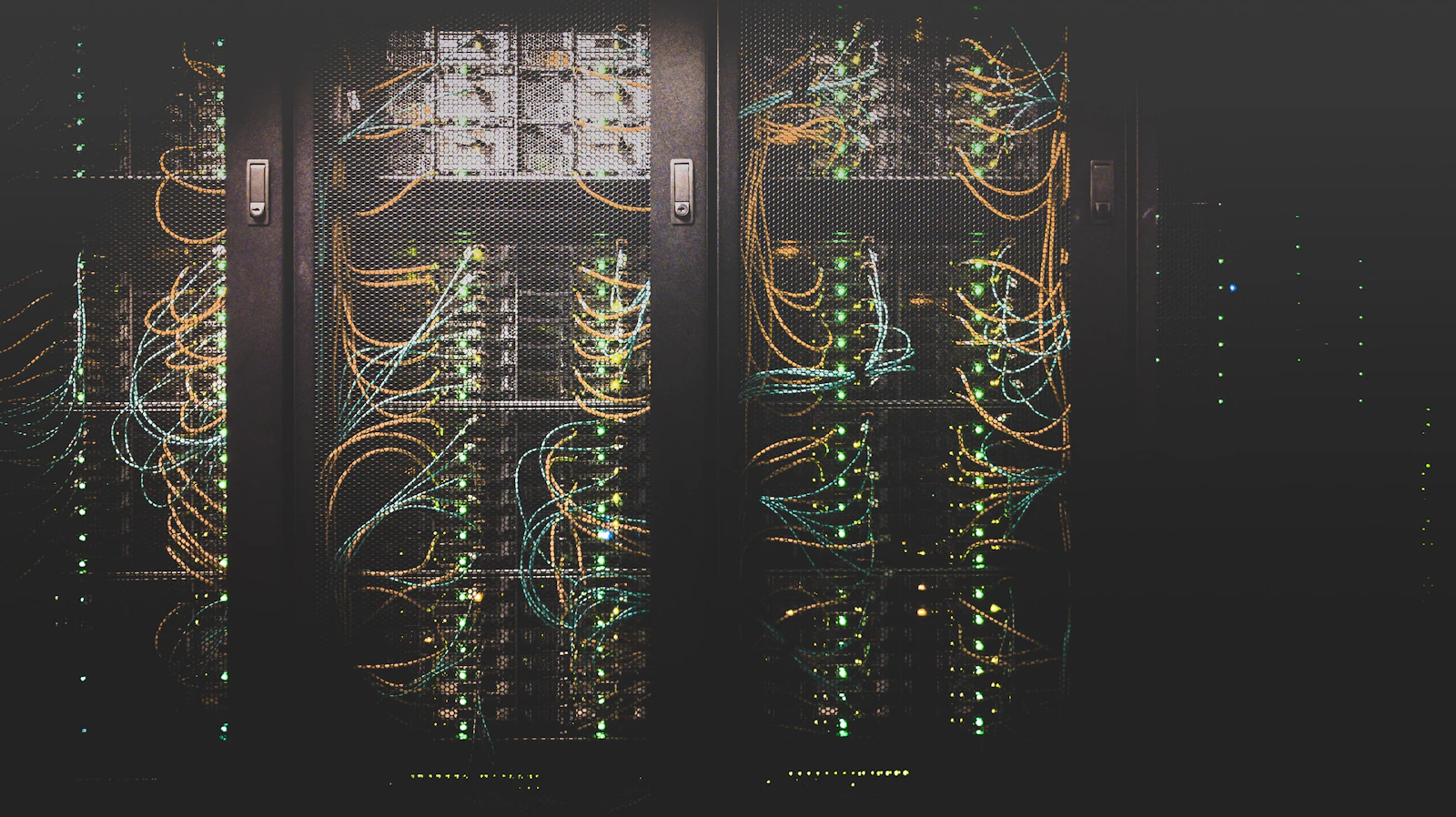
The design philosophy is the same one NVIDIA followed with Blackwell: sell a finished AI factory, not a box of parts. A rack combines GPUs, CPUs, networking, memory and power management into a single unit engineered to work together. Customers increasingly care about whole-system throughput rather than a single chip’s peak numbers, and TechPowerUp noted that NVIDIA’s performance gains rely on the Vera CPU and rack-level power management as much as on the GPU.
NVIDIA calls it the most ambitious project in its history. Jensen Huang has said it was developed by 40,000 engineers.
Vera Rubin Specs
| Component | Specification |
|---|---|
| Rubin GPU | Two reticle-sized dies, up to 50 petaflops FP4, 288 GB HBM4 |
| Vera CPU | 88 Arm cores |
| Rack composition | 72 Rubin GPU packages (144 dies) and 36 Vera CPUs |
| Rack FP4 inference | 3.6 exaflops |
| Rack FP8 training | 1.2 exaflops |
| Versus GB300 NVL72 | About 3.3 times the performance |
| Fast memory per rack | 75 TB |
| NVLink 6 bandwidth | 260 TB/s |
Figures come from NVIDIA as reported by DatacenterDynamics, TweakTown and Wccftech. NVIDIA has not disclosed how much power a full rack consumes, according to Glenn Lockwood’s notes, which matters a great deal to data-centre operators planning cooling and electrical capacity.
The memory figure deserves attention. 288 GB of HBM4 per GPU means very large models fit on fewer GPUs, and long contexts have more room for their cache. For inference, memory capacity and bandwidth often matter more than raw compute, which is why each generation’s memory upgrade tends to deliver bigger real-world gains than the headline flops suggest.
NVIDIA also claims up to ten times the agent throughput of the Grace Blackwell generation at scale. That figure depends heavily on workload and configuration, so treat it as a best-case marketing number.
One way to make the numbers concrete: a 288 GB GPU can hold the 4-bit weights of a model of roughly 500 billion parameters across two GPUs, where earlier generations needed four or more. Fewer GPUs per model instance means less communication between chips, which is often where real-world inference loses speed. That is the kind of gain that does not show up in a flops figure but does show up in cost per token.
NVL144 or NVL72? The Rename Explained
If you are confused about whether the rack is called NVL144 or NVL72, you are not alone. NVIDIA revealed it as Vera Rubin NVL144 at GTC in March 2025. The 144 was meant to count GPU dies, since each Rubin package contains two dies.
Then NVIDIA changed course. At CES 2026 it used NVL72, counting GPU packages instead, the same way it counted Blackwell racks. NVIDIA’s blog from October 2025 now carries an editorial note stating it was updated to reflect a branding change from Vera Rubin NVL144 to Vera Rubin NVL72.
It is the same rack either way: 72 packages, 144 dies, 36 Vera CPUs. When you read specifications, check which convention the source uses before comparing numbers across generations.
The Vera Rubin CPX Variant
NVIDIA also announced a variant built specifically for long-context inference, called the Vera Rubin NVL144 CPX. It adds Rubin CPX chips that handle the context phase, the part of inference that processes the input prompt, while the HBM4-equipped Rubin GPUs handle decode, the part that generates output tokens.
The idea is specialisation. Processing a million-token prompt is compute-heavy but does not need the expensive high-bandwidth memory that decode relies on. Splitting the work lets each chip do what it is best at. TechPowerUp reported the CPX rack targets 8 exaflops of NVFP4 compute, 100 TB of fast memory and 1.7 PB/s of aggregate bandwidth, about 7.5 times the GB300 NVL72 according to NVIDIA.
This matters because long context has become standard. Every major model released this autumn offers a million-token window. Hardware designed around that workload should eventually make long prompts cheaper, which would erode the long-context surcharges some providers charge today.
From Samples to Cloud Racks
| When | Milestone |
|---|---|
| March 2025 | Revealed at GTC as NVL144 |
| Early 2026 | First samples shipped to customers, announced on an earnings call |
| July 21, 2026 | Full production confirmed; systems shipping to customers including OpenAI |
| By August 2026 | Quanta expected initial deliveries to customers |
| September 30, 2026 | CoreWeave announces Vera Rubin NVL72 for early-access customers |
| Second half 2027 | Rubin Ultra NVL576 expected |
CFO Colette Kress said on an earnings call that NVIDIA had shipped its first Vera Rubin samples and remained on track for production shipments in the second half of the year. Tom’s Hardware noted that sampling almost certainly meant performance and power specifications were frozen.
Wccftech reported early customers including OpenAI, Microsoft, Google and neoclouds such as CoreWeave, and that initial production levels were not expected to be very high. That last point explains why most developers will not see Vera Rubin capacity at friendly prices for a while yet. GPU-per-hour price tables tracked by GPUperHour did not list Rubin at all as of October 1.
What Vera Rubin Means for Model Prices
This is the part that affects everyone who pays for an API. Model prices fell sharply in 2026. Claude Opus 5.5 cut list prices by 20%, Claude Haiku 5.5 by 90% per token, GPT-6 Luna halved its predecessor’s input price, and DeepSeek’s Flash model costs $0.15 per million input tokens off-peak. Much of that came from better models that use fewer tokens and from architectural tricks that cut memory per token.
Hardware is the next lever. If a rack produces roughly three times as many tokens for a similar footprint, the cost of serving each token falls. Providers compete on price, so a large share of those savings tends to reach customers over time.
The catch is timing. New hardware goes first to the largest buyers, who use it to train new models and serve their highest-volume products. The price effect shows up gradually as supply grows and older generations move down the stack. Expect the benefit to arrive through 2027 rather than all at once.
There is also a capability effect. More memory per GPU and specialised long-context hardware make it cheaper to offer longer contexts and bigger models. Some of the gain will be taken as better models at the same price rather than the same models at a lower price.
Should You Rent Vera Rubin Capacity?
For most teams, no, not yet. Early-access capacity is limited and priced for customers with very large workloads. If your models fit comfortably on Blackwell or Hopper hardware, those generations are easier to rent and, as newer hardware arrives, likely to get cheaper.
The case for early access is narrow but real: training or serving models so large that the extra memory changes what is possible, or very high-volume inference where a three-fold throughput gain justifies a premium. If that is you, the major clouds and neoclouds are the place to ask.
For everyone else, the better strategy is to keep your inference stack portable. If your serving code runs on standard inference engines and your models are not tied to one GPU generation, you can move to Vera Rubin capacity when it becomes cost-effective, without a rewrite.
What Comes After: Rubin Ultra
NVIDIA’s roadmap does not pause. Rubin Ultra is expected in the second half of 2027 in a much larger rack, the NVL576, scaling from 144 GPU dies to 576. That is a fourfold increase in GPUs per NVLink domain, aimed at the largest training runs.
The annual cadence has consequences for buyers. Hardware bought this year will be a generation behind next year. That is one reason many companies rent rather than buy, and why cloud providers price new generations at a premium that fades within months.
The Power and Cooling Question
The specification NVIDIA has not highlighted is power. Each generation packs more compute into a rack, and each generation’s racks draw more electricity and produce more heat. Glenn Lockwood’s notes record that NVIDIA had not disclosed expected rack power for the new platform.
That matters for anyone planning a data centre. Rack-scale AI systems already require liquid cooling and electrical capacity far beyond traditional server rooms. Facilities built a few years ago for conventional servers often cannot host the newest racks at all without major upgrades. Power availability, not chip supply, is increasingly what limits how fast AI capacity grows.
For the wider market, power constraints are another reason the price benefit of new hardware arrives slowly. Even when chips are available, the sites to run them take time to build. Announcements of new data-centre campuses, grid connections and power purchase agreements are as much a signal of future AI capacity as GPU shipment numbers.
Efficiency per watt is therefore one of the most important numbers in each generation, even if it gets less attention than peak flops. If the new platform delivers substantially more tokens per kilowatt-hour than Blackwell, the cost of serving models falls faster. If it mainly delivers more tokens per rack at proportionally higher power, the gains are smaller than the headline suggests.
Vera Rubin and the Software Stack
Hardware generations only deliver their gains when software catches up. Blackwell’s native 4-bit formats took months to become routine in popular inference engines, and the same pattern will repeat with Vera Rubin.
Models trained with 4-bit formats in mind, such as NVIDIA’s own Nemotron 3 Ultra, are the first to benefit fully, because they lose little quality when served at low precision. Older models quantised after training may need retuning to get the same gains without accuracy loss.
Inference servers also need updates to exploit the larger memory, the faster NVLink and, for the CPX variant, the split between context and decode phases. Disaggregated serving, where prompt processing and generation run on different hardware, is still maturing in open-source engines. Until it is routine, Vera Rubin CPX racks will mostly serve providers with their own custom software.
For teams that self-host, the practical advice is to stay on actively maintained inference engines and follow their release notes. The gap between what new hardware can do and what your software actually uses can be larger than the gap between hardware generations.
Reading the Benchmarks Sceptically
NVIDIA’s launch numbers are peak figures under ideal conditions. Exaflops at FP4 assume work that runs efficiently at 4-bit, with batches large enough to keep every GPU busy. Real workloads rarely look like that.
The more useful numbers come later, from independent tests and from cloud providers’ pricing. When renting a Vera Rubin rack costs a known amount per hour and serves a measured number of tokens for a popular open model, you can calculate cost per million tokens and compare it directly with Blackwell. Until then, treat multipliers such as 3.3 times and ten times as upper bounds, and plan around something more modest.
Who Should Use What
| If you are | Start with | Why | Link |
|---|---|---|---|
| A frontier lab or very large inference provider | Vera Rubin early access | Memory and throughput gains justify the premium | See availability |
| A team renting GPUs for open models | Blackwell or Hopper for now | Easier to rent, likely to get cheaper | Compare rentals |
| Running long-context workloads at scale | Watch for the CPX variant | Built for the context phase | Read the specs |
| Just paying for API tokens | Nothing to change | Benefit arrives through lower prices over time | Cut costs now |
Related on this site: for more context, see Nvidia Earnings, Nemotron 3 Ultra and Black Friday GPU Deals 2026.
Frequently Asked Questions About Vera Rubin
What is Vera Rubin?
NVIDIA’s 2026 data-centre platform, combining Rubin GPUs and 88-core Vera Arm CPUs in rack-scale systems. It succeeds Blackwell.
Is Vera Rubin shipping?
Yes. NVIDIA confirmed full production on July 21, 2026, with systems shipping to customers including OpenAI. CoreWeave announced availability for early-access customers on September 30.
How fast is it?
NVIDIA quotes 3.6 exaflops of FP4 inference and 1.2 exaflops of FP8 training per rack, about 3.3 times the GB300 NVL72. Each Rubin GPU has 288 GB of HBM4.
Why is it called NVL72 and NVL144?
It was announced as NVL144, counting GPU dies. NVIDIA later renamed it NVL72, counting GPU packages. It is the same rack with 72 packages and 144 dies.
Will it make AI cheaper?
Over time, very likely. More output per rack lowers the cost of serving each token, though early supply is limited and the effect should build through 2027.
What comes next?
Rubin Ultra in a 576-GPU NVL576 rack, expected in the second half of 2027.
Verdict
Treat Vera Rubin as the reason AI prices will keep falling rather than as something to buy. Its memory and throughput gains over Blackwell are large, and once supply grows, they will show up as cheaper tokens and longer contexts.
The caveat is that nearly every performance number is NVIDIA’s own, power consumption has not been disclosed, and early volumes are limited. The ten-times agent throughput claim in particular is a best case.
Next step: if you rent GPUs, keep your inference stack portable so you can move when Vera Rubin capacity becomes affordable; if you only use APIs, revisit your provider pricing every quarter, because that is where the benefit will land.
Sources and Further Reading
- DatacenterDynamics: Vera Rubin superchip, for rack specifications.
- GCN: chips begin shipping, for the full-production confirmation.
- GPUperHour: Vera Rubin guide, for the rename and cloud availability.
- TechPowerUp: platform details, for the CPX variant.
- Tom’s Hardware: first samples, for sampling and GPU memory.
On this site: lower your bill today with LLM API cost optimization, pick serving software from LLM inference servers compared, run models yourself with best local LLMs, and compare providers in AI models compared.