
Table of Contents
- What the Premium Buys
- The Three Tiers
- What to Check Before Buying
- Six Red Flags in a Listing
- Four Questions to Ask a Vendor
- Prebuilt Versus Building
- Specialist vs General Builders
- The Middle Path
- What These Cost to Own
- Five Mistakes When Buying
- Who Should Buy Prebuilt
- Where to Look
- Frequently Asked Questions
- Verdict
Building your own machine is cheaper. That is true, uncontroversial, and not always the point.
A prebuilt AI workstation buys you engineering you would otherwise do yourself — power delivery validated under sustained load, airflow solved for cards that run hot for hours, and someone to call when it does not work. Whether that is worth the premium depends on questions most buying guides never ask.
What the Premium Actually Buys
Four things, and only one of them is convenience.
Thermal engineering. The genuinely hard part of an AI machine, especially with two cards. Vendors who build these regularly have solved airflow between GPUs, which is a problem that takes most first-time builders at least one frustrating iteration.
Validated power delivery. Sustained inference draw is harder on a power supply than gaming peaks. A vendor has tested the configuration under that load. You would be testing it in production.
Support when it breaks. One number to call rather than eight component warranties and an argument about which part failed.
Time. It arrives working. If your hourly rate is meaningful and your weekend is not free, this is a real line item rather than a soft benefit.
Three Prebuilt AI Workstation Tiers
Desktop-class with a single flagship card
A standard tower with a 32GB card, sensible power supply and decent cooling. Runs 32B models comfortably, doubles as a workstation for everything else.
This tier competes most directly with building yourself, and the premium is hardest to justify — the engineering is not difficult at one card. Worth it mainly for the warranty and the time saved.
Dual-GPU workstation
Where a prebuilt AI workstation starts making real sense. Two flagship cards for 64GB combined, reaching 70B at 4-bit.
The thermal and power engineering here is genuinely difficult, and it is where self-builds most often disappoint, cards throttling because they sit too close together, or a power supply that seemed generous proving marginal. Paying someone who has solved it before is defensible.
Professional single-card
One 96GB professional card, running 70B at full precision or larger mixture-of-experts models. Simpler thermally than dual consumer cards, and priced accordingly.
Frequently the better choice at this level despite costing more, because the simplicity is worth something and the capability genuinely exceeds two consumer cards at 4-bit.
Prebuilt AI Workstation Checklist
Vendor specifications emphasise the graphics card. These are the things that actually determine whether the machine performs as advertised.
Power supply rating and quality. Not just wattage, the manufacturer and efficiency rating. This is where prebuilts most commonly economise, and it is the component that fails under sustained load.
Cooling specification. How many fans, what size, what case airflow design. Ask specifically about sustained load rather than peak temperatures.
Upgrade headroom. Can you add a second card later? Is the power supply sized for it? Is there physical spacing? Many prebuilts are specified exactly to their configuration with no room to grow.
What the warranty actually covers. Some exclude sustained compute workloads, which is precisely what you are buying it for. Worth reading before rather than after.
Component transparency. A vendor listing exact motherboard, power supply and memory models is more trustworthy than one saying “1000W PSU” and nothing further.
Six Red Flags in a Listing
Vendor specifications are written to sell. These are the details that reveal whether a prebuilt AI workstation was engineered for sustained load or assembled to a price.
1. Unspecified power supply. “1000W PSU” with no manufacturer named almost always means a budget unit. This is the single most common corner cut, and the one that causes crashes under inference.
2. Glass front panel. Looks good, restricts intake. On a machine at continuous load that shows up as declining performance over long jobs.
3. Gaming benchmarks in the marketing. Frame rates tell you nothing about sustained inference. A vendor leading with them is selling to a different buyer.
4. No mention of sustained load testing. Ask directly. A specialist will have an answer; a general builder will not understand the question.
5. Memory maxed with slow modules. Capacity headline, cheap parts. Ask for exact model numbers.
6. No upgrade path stated. If the listing does not say whether a second card fits, assume it does not.
Four Questions to Ask a Vendor
These separate specialists from assemblers quickly, and the quality of the answers matters more than the answers themselves.
“What is the sustained power draw under full GPU load, and what headroom does the supply have?” A specialist answers with numbers. An assembler quotes the label wattage.
“What GPU temperature should I expect after an hour of continuous inference?” The question that reveals whether they have tested the configuration the way you will use it.
“Does the warranty cover sustained compute workloads?” Some explicitly exclude them. Better to know now.
“Can I add a second card later, and is the supply sized for it?” Determines whether you are buying a machine or a dead end.
A vendor who answers all four clearly is worth paying a premium to. One who deflects is selling a gaming PC with an AI label, and the difference will become apparent about forty minutes into your first real job.
Prebuilt Versus Building: The Honest Comparison
| Prebuilt | Self-build | |
|---|---|---|
| Cost | Higher | Lower |
| Thermal engineering | Solved for you | Your problem |
| Component choice | Vendor’s | Yours |
| Support | One vendor | Eight warranties |
| Time to working | Unbox | A weekend |
| Upgrade freedom | Often limited | Complete |
| Best when | Dual-GPU, time-poor, business use | Single card, confident, budget-bound |
The pattern: at one card, build. At two, seriously consider prebuilt. Our workstation build guide covers what you are taking on if you build the dual-card version yourself.
Specialist Versus General Builders
The vendor category matters more than the specification sheet, because the two types optimise for genuinely different things.
Specialist workstation builders design for sustained compute. They size power supplies for continuous draw, they have solved airflow between cards, and their support staff understand what you mean when you say a job runs for six hours. You pay more, and what you are paying for is engineering rather than assembly.
General gaming system builders optimise for benchmark scores and appearance. Strong graphics cards, marginal power supplies, glass panels that restrict intake. None of that is incompetence. It is correct engineering for a different workload. It simply happens to be wrong for yours.
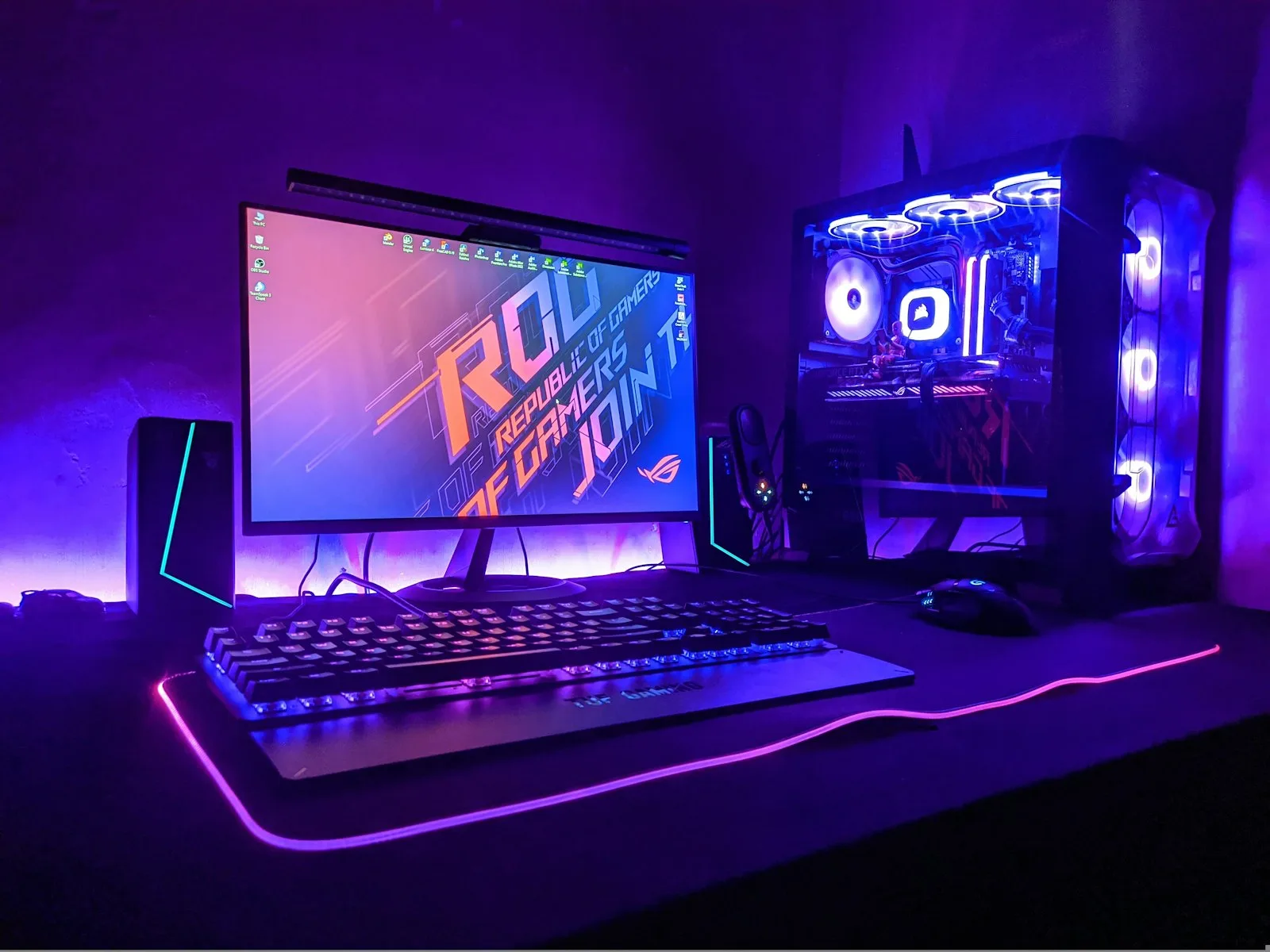
The tell is in the marketing. If a prebuilt AI workstation is being sold with frame rates and RGB lighting, it was designed for gaming and relabelled. If it is sold with thermal data, power headroom figures and upgrade paths, someone thought about sustained load.
Ex-lease professional workstations deserve a mention here too. Machines built for engineering or rendering workloads frequently come to market at a fraction of new pricing, already engineered for continuous operation. Check that the power supply supports a modern card and that there is physical clearance, and these can be exceptional value.
The Middle Path Most People Miss
Worth knowing because it captures most of the benefit at a fraction of the premium.
Buy a workstation-class chassis or barebones designed for dual GPUs, then fit your own cards, memory and storage. You inherit the thermal engineering, which is the genuinely hard part, and avoid the vendor markup on components you can source yourself.
This suits people who are comfortable assembling but do not want to solve airflow between two flagship cards from scratch. It is the option that rarely appears in prebuilt-versus-build discussions and frequently makes the most sense.
What These Actually Cost to Own
The purchase price is the visible number. Three others matter across a few years of ownership, and they change the prebuilt-versus-build calculation more than people expect.
Electricity. A machine running sustained inference draws considerably more than an idle desktop. Over a year of regular use this is a real figure, and it is one reason vendors specifying efficient power supplies are worth paying for rather than a corner to cut.
Downtime. The cost a prebuilt AI workstation is genuinely designed to reduce. If the machine sits idle for a fortnight waiting on a replacement part you sourced yourself, that outage has a price. With a vendor, it is their problem and usually faster.
Resale. Frequently overlooked. Complete workstations from recognised vendors hold value noticeably better than self-builds, because the buyer inherits documentation and often transferable warranty. On a three-year view that recovers a meaningful share of the original premium.
Factor all three and the gap between building and buying narrows considerably from the headline comparison. It rarely closes entirely, and it is smaller than the sticker difference suggests.
Five Mistakes When Buying Prebuilt
1. Buying a gaming PC with an AI label. The most common error. Gaming machines pair strong cards with power supplies sized for bursty load, which is the wrong profile entirely.
2. Not asking about sustained thermals. Peak temperature figures are meaningless. Ask what happens after an hour.
3. Ignoring upgrade headroom. A machine with no room for a second card or a larger supply is a dead end at exactly the point you outgrow it.
4. Paying for CPU you will not use. Vendors upsell processors because the margin is good. Inference runs on the GPU. That money belongs in the graphics card.
5. Buying before confirming you need local hardware. The expensive assumption, and the one no vendor will question for you.
Who Should Buy Prebuilt
Buy prebuilt if you need dual GPUs, the machine is for business use where downtime costs money, you value a single support contact, or your time is genuinely worth more than the premium.
Build instead if you want one card, you have built machines before, budget is the binding constraint, or you want specific components rather than a vendor’s choices.
Buy neither if you have not yet confirmed you need local hardware. The VRAM sizing guide will tell you what you actually need, and a hosted API is better value at low volume than any machine here.
Where to Look
| Category | Best for | Link |
|---|---|---|
| Single-GPU AI desktops | 32B models, general workstation use | Check listings |
| Dual-GPU workstations | 70B at 4-bit, serious local work | Check listings |
| Professional single-card | 70B at full precision | Check listings |
| Workstation chassis only | The middle path | Check listings |
Configurations and pricing in this category change frequently. Compare current listings rather than any specification quoted in an article.
Frequently Asked Questions
Is a prebuilt AI workstation worth the premium?
At two cards, frequently yes, the thermal engineering is genuinely difficult. At one card, harder to justify unless your time is scarce.
Can I upgrade a prebuilt later?
Sometimes. Check power supply headroom and physical slot spacing before buying, because many are specified exactly to their configuration.
Do gaming prebuilts work for AI?
Often poorly. They pair a good card with a marginal power supply, because gaming load is bursty and inference is not. Check the supply specification carefully.
What about used workstations?
Frequently good value, particularly ex-lease professional machines. Verify the power supply supports a modern card and check physical clearance.
Should I buy from a specialist or a general retailer?
Specialists understand sustained compute loads and specify accordingly. General retailers optimise for gaming benchmarks, which is a different requirement.
How long will one last?
Capacity ages better than compute for this workload. Three to four years is realistic before the memory ceiling rather than the speed forces an upgrade.
Verdict
A prebuilt AI workstation is worth paying for at exactly the point where the engineering gets hard, two cards, sustained load, and a machine something depends on. Below that, building yourself saves real money for work that is not difficult.
The question to ask is not whether you can build it. It is whether you want to spend an evening diagnosing why the upper card throttles after forty minutes. Both answers are legitimate, and knowing which one is yours makes the decision straightforward.
And before either: confirm you need local hardware at all. That is the expensive assumption, and it is the one nobody selling workstations will question for you.