
This review is built from published specifications, current retail pricing and third-party reporting rather than hands-on use. This card’s price moved dramatically through 2026, so verify current figures before budgeting.
The RTX PRO 6000 Blackwell holds 96GB of GDDR7 with ECC on a single card. That is three times an RTX 5090 and enough to load a 70B model at full precision with room left over, in one PCIe slot, without multi-GPU model splitting.
It launched in March 2025 at $8,565. By August 2026 street pricing sat between roughly $13,250 and $16,000, an increase of 55% to 87% driven by the GDDR7 shortage. That price movement changes the calculation considerably, and this RTX PRO 6000 Blackwell review is mostly about whether 96GB in one card still justifies it.
This guide assumes you already know 96GB is unusual, and focuses on whether it’s worth what NVIDIA now charges for it.
In this guide:
- What the RTX PRO 6000 Blackwell Is
- The Three RTX PRO 6000 Blackwell Variants
- Why 96GB in One Card Matters
- The Price Problem
- RTX PRO 6000 Blackwell vs the Alternatives
- Who Should Buy What
- Frequently Asked Questions About the RTX PRO 6000 Blackwell
- Verdict
- Sources and Further Reading
What the RTX PRO 6000 Blackwell Is
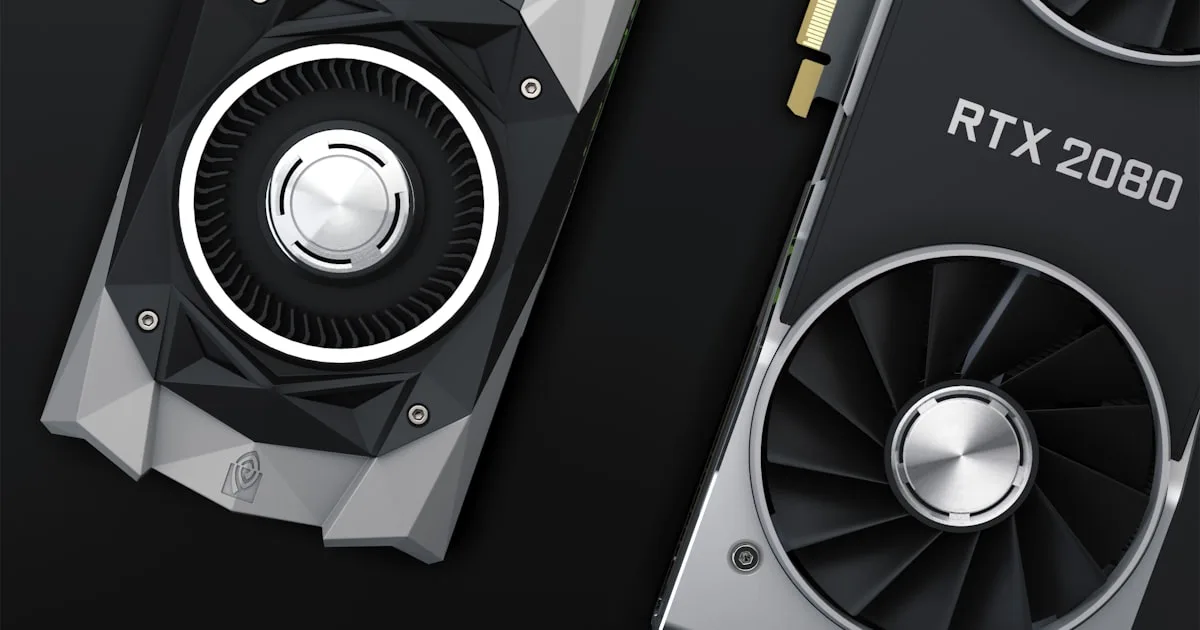
The RTX PRO 6000 Blackwell is NVIDIA’s professional workstation card built on the Blackwell architecture, sitting between consumer GeForce cards and data-centre accelerators like the H100 and B200.
The headline specification is 96GB of GDDR7 with ECC error correction. ECC matters for long-running training jobs where a single bit flip can silently corrupt results, and it’s one of the genuine functional differences between professional and consumer silicon rather than a segmentation choice.
Alongside that: 5th-generation Tensor Cores with FP4 support, 4th-generation RT cores, and NVIDIA’s professional driver stack with ISV certifications that matter in CAD, simulation and media workflows more than in AI work.
The Three RTX PRO 6000 Blackwell Variants
This is the part people get wrong when shopping, because the name covers three physically different products.
Workstation Edition draws up to 600W with a dual-flow-through cooler. It’s the highest-performance variant and the one that needs a case and power supply planned around it.
Max-Q Edition caps at 300W with a blower-style cooler that exhausts out the back. Half the power for a meaningful but not proportional performance reduction, and the blower design means multiple cards can sit adjacent without cooking each other. This is the variant that makes multi-card workstations practical.
Server Edition targets rack deployment with passive cooling that relies on chassis airflow.
For a single-card workstation, the Workstation Edition makes sense if your PSU and case allow. For two or more cards, Max-Q is usually the right answer despite the lower ceiling, because thermal throttling on stacked dual-flow-through cards erases the paper advantage.
Why 96GB in One Card Matters
The obvious question is why anyone would pay this much when two RTX 5090s give you 64GB for considerably less. The answer is that model splitting across cards is not free.
No tensor parallelism overhead. Splitting a model across two GPUs means constant inter-card communication over PCIe. On a single 96GB card, weights sit in one memory pool and none of that traffic exists.
Simpler software. Multi-GPU inference works, but it adds configuration, framework compatibility questions, and a category of bugs that single-card setups never encounter. Our dual-GPU build guide covers what that complexity actually looks like.
Larger models fit natively. A 70B model at FP16 needs roughly 140GB and won’t fit even here, but at 8-bit it lands around 70GB and sits comfortably on one RTX PRO 6000 Blackwell. That’s a model class no consumer card approaches.
ECC for long jobs. If you’re running multi-day training, silent memory corruption is a real failure mode that ECC addresses.
One slot, one power connector, one thermal problem. The build simplicity is worth something, particularly in workstations that also need to be quiet.
The Price Problem
The RTX PRO 6000 Blackwell’s value case rests entirely on where its price actually sits, and that has moved badly.
At the $8,565 launch price, the argument was reasonable: roughly three RTX 5090s worth of memory in one card, with ECC and professional drivers, at a premium that a business could justify. At $13,250 to $16,000, that argument gets much harder. The same GDDR7 shortage that pushed consumer cards up hit professional cards proportionally harder, because they carry more memory per card.
The comparison that stings: a Mac Studio M5 Ultra with 256GB of unified memory at 1.2TB/s bandwidth lists at $9,499, less than a single RTX PRO 6000 Blackwell at current street pricing. The Mac has no CUDA, which rules it out for many workflows, but on pure capacity per dollar it’s not close.
RTX PRO 6000 Blackwell vs the Alternatives
| RTX PRO 6000 Blackwell | 2x RTX 5090 | Mac Studio M5 Ultra 256GB | Framework Desktop | |
|---|---|---|---|---|
| Memory | 96GB GDDR7 ECC | 64GB total, split | 256GB unified | ~96GB addressable |
| Approx. price (Aug 2026) | $13,250 to $16,000 | Varies, roughly $5,000+ | $9,499 | $3,449 |
| CUDA | Full | Full | None | ROCm only |
| Model splitting needed | No | Yes | No | No |
| ECC | Yes | No | No | No |
| Bandwidth | High | Highest per card | 1.2 TB/s | ~256 GB/s |
Against two RTX 5090s, the RTX PRO 6000 Blackwell wins on simplicity, ECC and single-pool capacity, and loses substantially on price. Against the Mac Studio, it wins on CUDA and loses on capacity per dollar. Against Strix Halo, it wins on everything except price, where it loses by roughly four times.
RTX PRO 6000 Blackwell Power and Build Requirements
Worth planning before you buy, because the Workstation Edition’s 600W is not a trivial number.
A 600W card needs a power supply with meaningful headroom above that once you add a CPU, storage and fans. Quality 1000W to 1200W units are the sensible floor for a single-card build, and the dual-flow-through cooler needs case airflow designed for it rather than assumed.
The Max-Q variant’s 300W ceiling makes it far easier to accommodate, and its blower design exhausting directly out the rear is why it’s the practical choice for anyone considering two cards. Stacking two 600W dual-flow-through cards in a standard tower is a thermal problem that most cases won’t solve.
Who Should Buy What
| If you are | Start with | Why | Link |
|---|---|---|---|
| Running 70B models in CUDA, single card | RTX PRO 6000 Blackwell Workstation | 96GB in one pool, no model splitting | Check price |
| Building a multi-card workstation | RTX PRO 6000 Blackwell Max-Q | Blower cooling makes adjacent cards viable | Check price |
| Needing capacity, CUDA not required | Mac Studio M5 Ultra | 256GB at lower cost, no CUDA | N/A |
| Cost-focused, CUDA not required | Framework Desktop | Similar capacity at a quarter of the price | N/A |
| Running 30B-class models in CUDA | RTX 5090 | 32GB covers it at a fraction of the cost | N/A |
Frequently Asked Questions About the RTX PRO 6000 Blackwell
Is the RTX PRO 6000 Blackwell better than two RTX 5090s?
For simplicity and capacity, yes. For price, no. Two 5090s give 64GB but require model splitting with its associated overhead and configuration work. The RTX PRO 6000 Blackwell gives 96GB in one pool with ECC, at roughly two to three times the cost.
What does ECC actually do for AI work?
It detects and corrects single-bit memory errors. For inference, a corrupted bit usually produces a slightly wrong token nobody notices. For multi-day training runs, silent corruption can invalidate results in ways that are extremely hard to debug. That’s the real case for ECC.
Which variant should I buy?
Workstation Edition for a single card in a case with good airflow and a 1000W-plus supply. Max-Q if you’re fitting two cards, if your case is thermally constrained, or if noise matters. Server Edition only for rack chassis with front-to-back airflow.
Can it run a 70B model at full precision?
At FP16, a 70B model needs roughly 140GB, so no. At 8-bit it lands around 70GB and fits comfortably. At 4-bit you have room for a 70B model plus substantial context, or several smaller models resident simultaneously.
Is it worth waiting for prices to fall?
The GDDR7 shortage driving 2026 pricing has no announced end date. If the capability unlocks work you’re being paid for, the maths may already favour buying. If it’s aspirational, waiting costs nothing but has an indefinite horizon.
How does it compare to renting an H100?
Cloud H100 access runs roughly $1.50 to $3.30 per hour depending on provider. At $13,250, the RTX PRO 6000 Blackwell breaks even against a $2.50/hour H100 at around 5,300 hours of use. If you’re running sustained daily workloads, owning wins. For occasional bursts, renting is cheaper and our Vast.ai review covers the marketplace option.
The Rent-Versus-Buy Calculation
For a card at this price, the alternative isn’t only other hardware. It’s not owning hardware at all.
Cloud H100 access runs roughly $1.50 to $1.90 per hour on marketplace providers like Vast.ai and around $2.50 to $3.30 per hour on managed platforms like Lambda with an SLA attached. Against an RTX PRO 6000 Blackwell at $13,250, break-even against a $2.50 hourly rate arrives somewhere near 5,300 hours, or about seven months of continuous use.
That framing favours ownership more than people expect if the machine genuinely runs most of the time. It favours renting heavily if usage is bursty, because an idle owned card earns nothing while an idle rented instance costs nothing.
Two other factors weigh on the buy side. Data that cannot leave your premises for regulatory reasons removes cloud from consideration entirely. And an owned card has resale value, where rental spend is gone. Our Vast.ai review covers the cheapest rental route and its trade-offs.
Who This Card Is Not For
Worth being direct, because the specification is impressive enough to tempt people it doesn’t suit.
Hobbyists running models under 30B. An RTX 5090 at a third of the price handles this comfortably. The RTX PRO 6000 Blackwell’s capacity only earns its cost once you genuinely exceed what consumer cards hold.
Anyone whose workload is bursty. As the rent-versus-buy maths above shows, occasional heavy use favours cloud rental substantially. Owning makes sense at sustained utilisation, not peak capability.
Teams that can work around CUDA. If your tooling runs on MLX or ROCm, a Mac Studio M5 Ultra or a Strix Halo machine delivers comparable or greater capacity for a fraction of the outlay. The CUDA requirement is what justifies this card’s premium; without it, the case largely collapses.
Gaming. Professional drivers are tuned for ISV-certified applications rather than games, and a consumer card at a fraction of the price will perform better at it.
Verdict
The RTX PRO 6000 Blackwell does something no other single card does: 96GB of ECC memory in one pool with full CUDA support. For workflows that need large models, professional drivers and the simplicity of avoiding multi-GPU splitting, it remains the only real answer in a workstation form factor.
The honest caveat is the price, and it’s a serious one. At the $8,565 launch price this was a defensible professional purchase. Between $13,250 and $16,000, it sits awkwardly against a Mac Studio M5 Ultra offering 256GB for $9,499, and against two RTX 5090s that cost less than half as much for 64GB. The card didn’t get worse. The market around it moved, and buyers should price it against current alternatives rather than its reputation.
Concrete next step: work out the actual cost of the multi-GPU alternative for your specific workload, including the PSU, case and time spent configuring model splitting. If that total lands within a few thousand dollars of a single RTX PRO 6000 Blackwell, the single card is probably worth it. If the gap is larger, the complexity may be the cheaper trade.
Sources and Further Reading
- NVIDIA professional desktop GPU page — manufacturer specifications and variant differences
- TechPowerUp GPU database — independently compiled specifications and memory configurations
- Tom’s Hardware GPU coverage, ongoing reporting on professional card pricing through the memory shortage
- ServeTheHome workstation coverage, hands-on testing of professional GPUs in real workstation and server chassis
- Hugging Face model hub, model cards with parameter counts for working out what actually fits in 96GB
For related coverage on this site, see our best GPUs for local AI ranking, the RTX 5090 review for the consumer flagship, the dual-GPU build guide for the multi-card alternative, and how much VRAM you need for working out whether 96GB is actually necessary.