
This review is built from published specifications, current retail pricing and third-party testing rather than hands-on use. GPU pricing moved sharply through 2026 because of the GDDR7 shortage, so verify current figures before buying.
The RTX 5070 Ti sits in an awkward spot. It has the same 16GB of VRAM as the far cheaper RTX 5060 Ti, and half the memory of the RTX 5090, which means the specification that matters most for local AI is identical to a card costing considerably less.
That framing is unfair to the RTX 5070 Ti, but only partly. What it actually offers is bandwidth, and whether that justifies the gap between it and a 5060 Ti depends entirely on whether your models fit in 16GB. This RTX 5070 Ti review covers where the card genuinely earns its price and where it doesn’t.
This guide is written for people choosing a GPU primarily for local AI work, with gaming as a secondary consideration.
In this guide:
- The RTX 5070 Ti Specification That Matters
- Why 16GB Is the Whole Conversation
- RTX 5070 Ti vs the Rest of the Blackwell Line
- What Actually Fits in 16GB
- The 2026 Pricing Problem
- Who Should Buy What
- Frequently Asked Questions About the RTX 5070 Ti
- Verdict
- Sources and Further Reading
The RTX 5070 Ti Specification That Matters
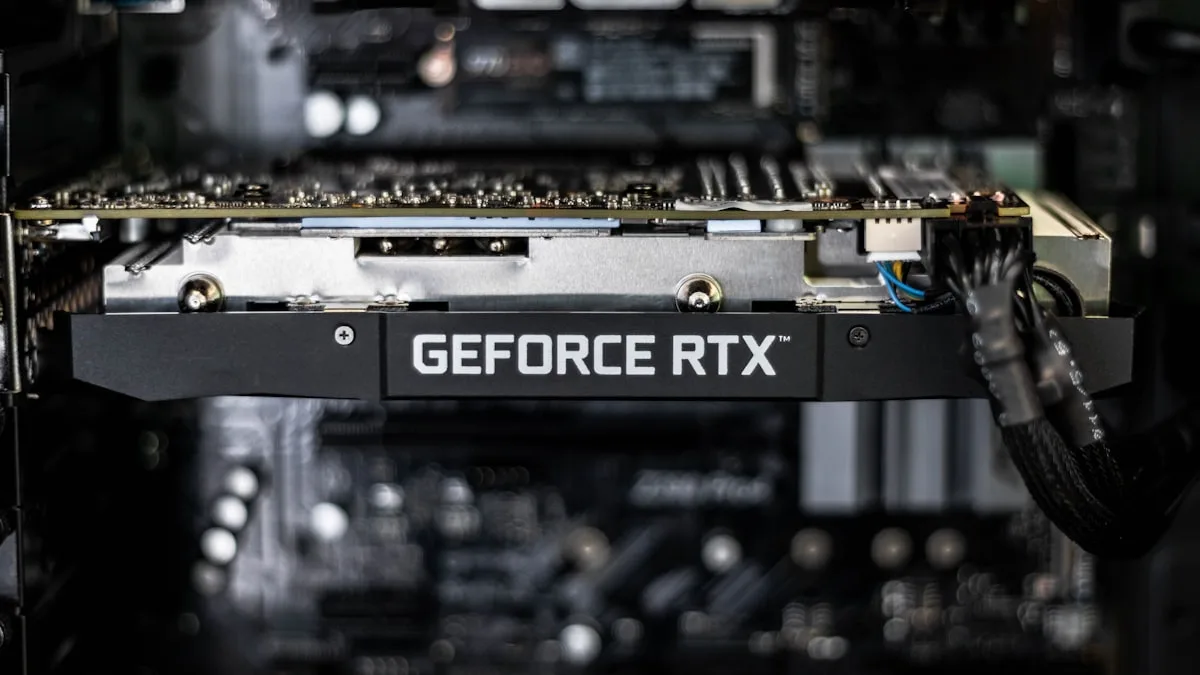
For local AI work, four numbers decide everything about a graphics card. Here is where the RTX 5070 Ti lands:
- 16GB GDDR7 across a 256-bit memory bus
- PCIe 5.0 interface
- Blackwell architecture with 5th-generation Tensor Cores
- Boost clock around 2,588 MHz
The 256-bit bus paired with GDDR7 is the RTX 5070 Ti’s real advantage. The RTX 5060 Ti carries the same 16GB but on a narrower 128-bit bus, which roughly halves effective bandwidth. Since local LLM inference is overwhelmingly bandwidth-bound once a model is resident in memory, that difference translates fairly directly into tokens per second.
The 5th-generation Tensor Cores add FP4 support, which matters more for image generation and future quantisation formats than for most current LLM workflows.
Why 16GB Is the Whole Conversation
Every serious discussion about the RTX 5070 Ti for AI comes back to capacity, because VRAM is a hard wall rather than a soft constraint. A model either fits or it doesn’t. There’s no graceful degradation, just an out-of-memory error.
At 16GB you comfortably run:
- 7B and 8B models at full precision or near it
- 13B and 14B models at 4-bit to 6-bit quantisation
- Most image generation workloads including SDXL
- Small-to-mid fine-tuning jobs with LoRA
At 16GB you cannot run a 70B model at any usable quantisation without offloading to system RAM, which collapses throughput. That ceiling is identical on the RTX 5060 Ti and the RTX 5070 Ti. Paying more for the RTX 5070 Ti buys you speed within that ceiling, not a higher ceiling.
Our guide to how much VRAM you need for local AI works through the arithmetic in detail, and it’s worth reading before spending on either card.
RTX 5070 Ti vs the Rest of the Blackwell Line
| RTX 5060 Ti | RTX 5070 Ti | RTX 5080 | RTX 5090 | |
|---|---|---|---|---|
| VRAM | 16GB GDDR7 | 16GB GDDR7 | 16GB GDDR7 | 32GB GDDR7 |
| Memory bus | 128-bit | 256-bit | 256-bit | 512-bit |
| Relative bandwidth | Lowest | Mid | High | Highest |
| Best for | Budget entry, 7B to 13B | Mid-range, faster 13B | Fast 13B to 14B, image gen | 30B-class models |
The uncomfortable observation: three of the four cards top out at 16GB. Within the consumer Blackwell line, only the RTX 5090 raises the capacity ceiling, and it does so at a price that puts it in a different conversation entirely.
That makes the RTX 5070 Ti a speed upgrade over the 5060 Ti rather than a capability upgrade. If a model doesn’t fit on a 5060 Ti, it won’t fit on the RTX 5070 Ti either.
Against the RTX 5080, this is the value option in the same capacity class. Against the RTX 5090, it’s a fundamentally different tier.
What Actually Fits in 16GB
Rough guidance for planning, assuming you leave a couple of gigabytes of headroom for context and overhead:
| Model size | Quantisation | Approximate VRAM | Fits in 16GB? |
|---|---|---|---|
| 7B | FP16 | ~14GB | Tight but yes |
| 7B | 4-bit | ~4GB | Comfortably |
| 13B | 4-bit | ~8GB | Comfortably |
| 14B | 6-bit | ~11GB | Yes |
| 32B | 4-bit | ~18GB | No |
| 70B | 4-bit | ~40GB | No |
The practical RTX 5070 Ti sweet spot is 13B to 14B models at moderate quantisation, where you get good quality and the full bandwidth advantage of the 256-bit bus. That’s a genuinely useful band for coding assistance, summarisation and general local chat.
If you need 30B-class models, the honest answer is that no 16GB card gets you there, and your realistic options are an RTX 5090, a Strix Halo box with far more capacity but less bandwidth, or a dual-GPU build.
The 2026 Pricing Problem
Any RTX 5070 Ti recommendation has to be caveated on price, because the GDDR7 shortage has distorted this market badly.
Reporting through 2026 documented the RTX 5070 Ti carrying a substantial premium over its nominal MSRP in several markets, with Canadian pricing at one point running roughly 47% above list. The same pressure pushed NVIDIA’s professional cards up dramatically and raised the price of essentially every memory-heavy product.
Two consequences follow. First, the value calculation between the RTX 5070 Ti and its neighbours shifts depending on which cards are actually discounted in your region on a given week. Second, used-market cards from the previous generation became relatively more attractive, which is covered in our used GPU buying guide.
Check live pricing across the 5060 Ti, 5070 Ti and 5080 before committing. The right answer changes with the spread.
Power and Build Considerations
The RTX 5070 Ti is a mainstream-tier card in physical terms, which makes it easier to build around than the flagship options.
It fits comfortably in most mid-tower cases without the clearance headaches that come with triple-slot 5090 designs, and its power draw sits well within what a quality 750W to 850W supply handles alongside a typical CPU. That matters more than it sounds: an RTX 5090 build often forces a PSU upgrade and a case change, adding a few hundred dollars that never appears in the GPU’s sticker price.
For anyone considering two cards later, the RTX 5070 Ti’s more modest power and thermal profile makes a dual-GPU configuration considerably less painful than pairing two flagship cards. That said, dual-GPU inference brings its own complications around PCIe lane allocation and model splitting, which our dual-GPU build guide covers properly.
Who Should Buy What
| If you are | Start with | Why | Link |
|---|---|---|---|
| Running 13B to 14B models and want speed | RTX 5070 Ti | 256-bit bus roughly doubles effective bandwidth over the 5060 Ti | Check price |
| On a tight budget, 7B to 13B is enough | RTX 5060 Ti | Same 16GB ceiling for meaningfully less money | N/A |
| Doing heavy image generation | RTX 5080 | Compute-bound workloads reward the extra horsepower | N/A |
| Needing 30B-class models | RTX 5090 | 32GB is the only consumer card clearing the 16GB wall | N/A |
| Needing very large models on a budget | Framework Desktop | Roughly 96GB capacity, far lower bandwidth | N/A |
Frequently Asked Questions About the RTX 5070 Ti
Is the RTX 5070 Ti worth it over the RTX 5060 Ti for AI?
Only if you’re bandwidth-limited rather than capacity-limited. Both cards hold 16GB, so they run the same models. The RTX 5070 Ti’s 256-bit bus makes those models faster. If your current bottleneck is “this model won’t load,” it won’t help.
Can the RTX 5070 Ti run a 70B model?
Not usefully. A 70B model at 4-bit needs roughly 40GB. You can offload layers to system RAM, but throughput drops to the point where it isn’t a practical workflow. For 70B you need an RTX 5090 at minimum, or a high-capacity unified-memory machine.
Is 16GB enough for fine-tuning?
For LoRA and QLoRA fine-tuning of models up to roughly 13B, yes. Full fine-tuning of anything substantial needs considerably more. The 16GB ceiling is the binding constraint, and it’s shared across most of the consumer Blackwell line.
How does it compare to a used RTX 4090?
The 4090 offers 24GB against the RTX 5070 Ti’s 16GB, which is a meaningful capacity advantage that opens up larger models. If you can find one at a sensible price, it’s worth considering. Our used GPU guide covers what to check before buying second-hand.
Does PCIe 5.0 matter for AI work?
Barely, for single-GPU inference. Once a model is loaded into VRAM the PCIe bus is largely idle. It matters more for multi-GPU setups and for workloads that stream data continuously.
Will prices come down?
Nobody knows, and the memory shortage driving 2026 pricing has no clearly announced end. Treating current prices as temporary and waiting is reasonable only if you can afford to wait indefinitely.
Beyond LLMs: What Else the Card Does
Local text generation dominates these discussions, but most people buying a GPU in this bracket will use it for more than one thing.
Image generation. SDXL and comparable diffusion models run comfortably in 16GB, and this is where the RTX 5070 Ti’s compute advantage over the 5060 Ti shows more clearly than in LLM work. Diffusion is compute-bound rather than purely bandwidth-bound, so the gap widens.
Speech and audio. Whisper transcription and most text-to-speech models are modest in memory terms and run well. Anyone building a voice agent stack locally will find 16GB is not the constraint.
Embeddings and retrieval. Embedding models are small, often under 2GB, so this card handles the retrieval side of a RAG pipeline easily while leaving room for a generation model alongside. Our guide to embedding models covers which ones are worth running.
Gaming. Worth stating plainly since it affects the value calculation for many buyers. This is a capable 1440p and entry 4K gaming card, and if the machine does double duty the effective cost of the AI capability drops considerably.
Common Mistakes Buying in This Tier
Four patterns worth avoiding, drawn from how people typically get this decision wrong.
Buying on benchmark scores rather than VRAM. Gaming benchmarks and synthetic scores tell you little about whether a model loads. Capacity is binary and it comes first; speed is a secondary consideration within whatever ceiling you’ve bought.
Assuming a bigger number means a bigger ceiling. The 5060 Ti, 5070 Ti and 5080 all hold 16GB. Stepping up within that group buys speed, never a new model class. That’s counterintuitive and it catches people out repeatedly.
Ignoring the rest of the build. A GPU that requires a new power supply and case adds several hundred dollars that never appears in comparisons. Mainstream-tier cards avoid this; flagship cards frequently don’t.
Comparing MSRP rather than street price. In the 2026 market, nominal prices and actual prices diverged sharply and inconsistently across regions and weeks. Any recommendation based on list prices, including parts of this one, needs checking against what you can actually pay today.
Verdict
The RTX 5070 Ti is a good card in an awkward position. Its 256-bit GDDR7 bus makes it meaningfully faster than the RTX 5060 Ti on the models both can run, and for anyone whose work lives in the 13B to 14B band it’s a sensible mid-range choice with genuine headroom for image generation alongside.
The honest caveat is that 16GB is the same ceiling as the card below it and the card above it. The RTX 5070 Ti doesn’t unlock any model class that a 5060 Ti can’t attempt. That makes it a speed purchase rather than a capability purchase, and speed purchases are much more sensitive to price than capability ones. In a distorted 2026 market, a heavily discounted 5060 Ti or a well-priced used 4090 with 24GB can be the better buy on any given week.
Concrete next step: before ordering, write down the three specific models you actually intend to run and check their quantised VRAM requirements against 16GB. If all three fit comfortably, the RTX 5070 Ti is a reasonable choice and you’re buying speed. If any of them don’t fit, no card in this tier solves your problem and you should be shopping in a different bracket entirely.
Sources and Further Reading
- NVIDIA GeForce RTX 50 Series official page — manufacturer specifications for the full Blackwell consumer line
- TechPowerUp GPU database — independently compiled specifications including memory bus width and bandwidth figures
- Tom’s Hardware GPU coverage, ongoing reporting on Blackwell pricing and the memory shortage
- llama.cpp repository, quantisation formats and the community discussions where real VRAM requirements get documented
- Hugging Face model hub, model cards listing parameter counts and typical memory requirements
For related coverage on this site, see our best GPUs for local AI ranking, the RTX 5060 Ti review for the budget alternative, the RTX 5080 review for the step up, and how much VRAM you need for the sizing arithmetic behind all of these recommendations.