
This review is built from published specifications, current retail pricing and third-party testing rather than hands-on use. Pricing in the Strix Halo category has moved sharply through 2026 because of the memory shortage, verify current figures before buying.
The GMKtec EVO-X2 is the cheapest route to 128GB of unified memory in a mini PC, and it has been since the category existed. The GMKtec EVO-X2 launched around $1,499. By August 2026 the 128GB configuration with a 2TB SSD listed at $3,649.99, with a 64GB and 1TB build at $1,999.99.
That price movement isn’t GMKtec gouging. Every Ryzen AI Max+ 395 box repriced upward through 2026 as LPDDR5X supply tightened. What matters is that the GMKtec EVO-X2 is still the value pick in its class, and that “value pick” here means accepting two specific compromises that the Framework Desktop and Beelink GTR9 Pro don’t ask of you.
This GMKtec EVO-X2 review covers what the machine offers, the two compromises it asks you to accept, and whether it still holds its value crown.
In this guide:
- What the GMKtec EVO-X2 Is
- The Two Compromises
- Performance: Same Chip, Same Numbers
- GMKtec EVO-X2 vs Framework Desktop vs Beelink
- The Software Reality
- Power and Placement
- Who Should Buy What
- Frequently Asked Questions About the GMKtec EVO-X2
- Verdict
- Sources and Further Reading
What the GMKtec EVO-X2 Is
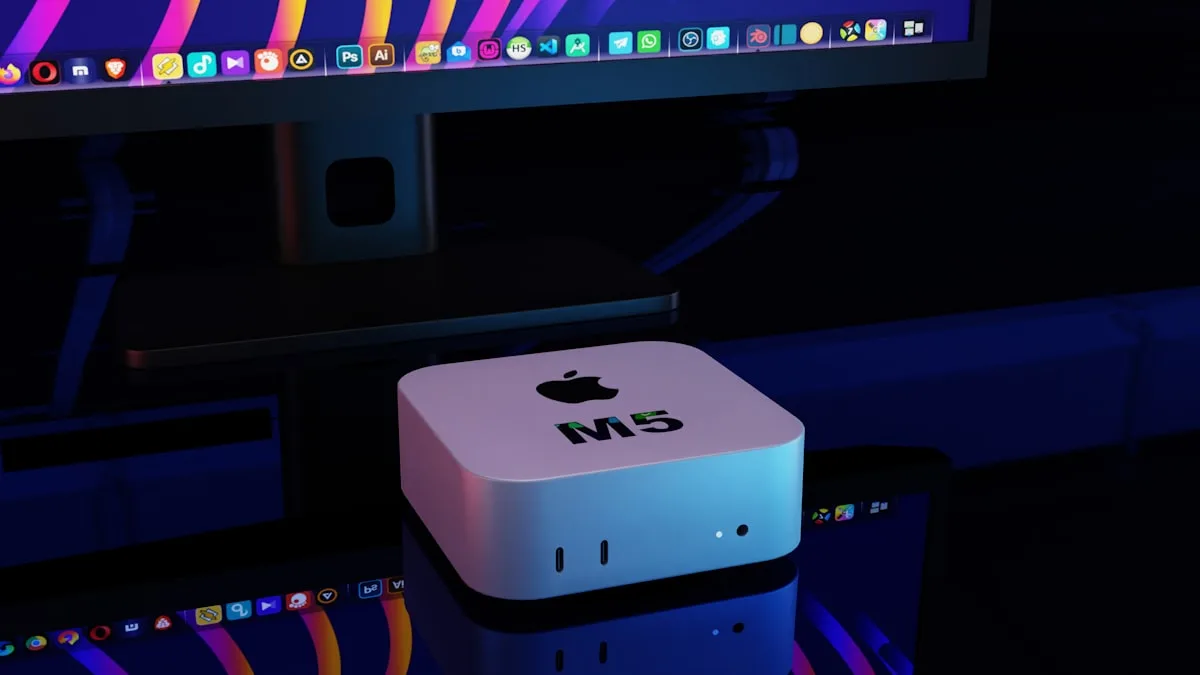
The GMKtec EVO-X2 is a mini PC built around AMD’s Ryzen AI Max+ 395: 16 Zen 5 cores, a 40-compute-unit Radeon 8060S integrated GPU, an XDNA 2 NPU rated at 50 TOPS, and 128GB of LPDDR5X-8000 across a 256-bit bus delivering roughly 256 GB/s.
On Linux, about 96GB of that 128GB pool is addressable as GPU memory. That is the number that makes this category interesting: more usable model space than a discrete RTX 5090’s 32GB, at a fraction of the power draw.
Connectivity is where the GMKtec EVO-X2 diverges from its siblings. It offers two USB4 ports and dual M.2 slots, which is respectable. It offers a single 2.5GbE network port, which is not.
The Two Compromises
Both are known, both are documented in third-party coverage, and both are entirely liveable depending on what you’re building.
Networking on the GMKtec EVO-X2: single 2.5GbE. The Beelink GTR9 Pro offers dual 10GbE. If you’re building a model-serving node that other machines pull from, 2.5GbE becomes the bottleneck long before the GPU does. If this is a desktop you sit in front of, it’s irrelevant.
Cooling on the GMKtec EVO-X2: audible under load. Reported as noticeably louder than the Beelink’s vapor-chamber design or a Noctua-equipped Framework Desktop. For a machine that might run inference jobs for hours, noise is a real quality-of-life factor. In a home office, it will be noticed.
Neither compromise affects inference throughput. Both affect whether you enjoy owning the machine.
Performance: Same Chip, Same Numbers
This deserves emphasis in any GMKtec EVO-X2 review because it’s the single most useful thing to understand about the Strix Halo category: all three main boxes run the same silicon at broadly the same speed.
Published figures from ServeTheHome, CraftRigs and community llama.cpp testing on Strix Halo converge on:
| Model class | Reported throughput |
|---|---|
| Sub-10B dense | Roughly 40–80 tokens/sec |
| Qwen3-30B | Around 100 tokens/sec reported |
| 27–35B MoE | Usable double digits |
| Dense 70B | Single digits |
The GMKtec EVO-X2 is not slower than the Framework Desktop because it costs less. You are not buying performance differences in this category. You are buying chassis, cooling, networking and vendor support.
The capacity-versus-bandwidth trade defines what this class is good at: models in the 27–35B range that need more memory than a consumer discrete card offers but don’t saturate 256 GB/s. Dense 70B models fit but crawl. Our guide to how much VRAM you need for local AI covers the sizing arithmetic that makes this trade concrete.
GMKtec EVO-X2 vs Framework Desktop vs Beelink
| GMKtec EVO-X2 | Framework Desktop | Beelink GTR9 Pro | |
|---|---|---|---|
| 128GB price (Aug 2026) | $3,649.99 (2TB SSD) | $3,449 | $4,349 |
| 64GB option | $1,999.99 (1TB) | $1,959 | N/A |
| Networking | Single 2.5GbE | 5GbE | Dual 10GbE |
| Storage | Dual M.2 | Dual M.2, PCIe slot | Dual M.2 |
| Cooling | Audible under load | Noctua option available | Vapor chamber, quietest |
| Linux | Works | First-class vendor target | Intel E610 NIC needs a driver workaround |
| Expandability | Sealed mini PC | Standard mini-ITX board, PCIe slot | Sealed mini PC |
The honest GMKtec EVO-X2 read: at current pricing the Framework Desktop actually undercuts it on the 128GB configuration while offering better networking and genuine expandability. The GMKtec EVO-X2’s value case is strongest on the 64GB tier at $1,999.99, and at whatever discount it happens to be running.
That is a real shift from earlier in the category’s life, when the $1,499 launch price made it the obvious default. Check both prices on the day you buy rather than assuming.
The Software Reality
The GMKtec EVO-X2 runs AMD’s ROCm stack, and this is where expectations need calibrating regardless of which box you choose.
Ollama and LM Studio both work well and represent the low-friction path for single-user local inference. llama.cpp with Vulkan or ROCm backends is where the community has done most of its tuning and gives more control. Beyond that, the picture thins: vLLM and much of the production serving ecosystem remain CUDA-first, and niche research code frequently assumes CUDA.
If you’re comfortable reading GitHub issues and occasionally compiling something, none of that blocks you. If you want the hardware to disappear, it’s a genuine cost. Our LLM inference server comparison covers which serving stacks realistically work on AMD hardware.
Power and Placement
The efficiency story is the same across the Strix Halo category and it is genuinely one of the platform’s better arguments.
The Ryzen AI Max+ 395 has a 55W default TDP, with typical draw around 65W and boost to roughly 120W. A multi-GPU NVIDIA tower running comparable model sizes can pull five to ten times that. For a machine doing inference several hours a day, that shows up on the electricity bill and in room temperature.
Where the GMKtec EVO-X2 differs from its siblings is what that efficiency buys you in practice. The chip runs cool by tower standards, but this chassis works harder to move the heat, which is exactly why the fan noise gets mentioned in every review. Efficient silicon and a quiet machine are not the same claim.
If the machine will sit on a desk you work at, that distinction is worth the price difference to a Framework Desktop with the Noctua option or a vapor-chamber Beelink. If it lives in a cupboard or a rack, it is noise you will never hear.
Who Should Buy What
| If you are | Start with | Why | Link |
|---|---|---|---|
| Price-focused, want 64GB unified memory | EVO-X2 64GB at $1,999.99 | Strongest value tier in the whole category | Check price |
| Want 128GB on the lowest budget | Compare EVO-X2 and Framework same-day | Framework currently undercuts it; prices move weekly | Check price |
| Building a serving node for a network | Beelink GTR9 Pro | Dual 10GbE; 2.5GbE will bottleneck you | Check price |
| Wanting expandability and Linux support | Framework Desktop | PCIe slot, standard board, Linux-first vendor | N/A |
| Needing dense 70B at conversational speed | Mac Studio M5 Ultra | Bandwidth is the binding constraint, not capacity | N/A |
What You Give Up Versus a Discrete GPU
Worth stating plainly, since the 128GB headline can obscure it.
Training and fine-tuning. Most fine-tuning tooling assumes CUDA. LoRA and QLoRA on AMD hardware are possible but far less well-trodden. If fine-tuning is central rather than occasional, this platform will frustrate you.
Image and video generation. Diffusion models lean compute-bound rather than bandwidth-bound, which favours discrete cards. Stable Diffusion runs on the GMKtec EVO-X2, but an RTX 5080 will be considerably faster despite holding a quarter of the memory.
Peak speed on small models. Anything that fits comfortably in 24GB or 32GB runs faster on a discrete card. This platform’s advantage only appears once you exceed what a consumer GPU can hold.
CUDA-only software. A meaningful share of research code and production serving tooling assumes NVIDIA. There is usually an alternative path; you will occasionally spend an evening finding it.
None of these rule out the machine for its intended audience. All are worth knowing before spending $3,649.99.
Frequently Asked Questions About the GMKtec EVO-X2
Is the GMKtec EVO-X2 still the cheapest 128GB option?
Not reliably, as of August 2026. The Framework Desktop listed at $3,449 against the EVO-X2’s $3,649.99 for comparable memory. The clearest value is now the 64GB tier at $1,999.99. Prices in this category move frequently, so check both.
Can I upgrade the memory later?
No. LPDDR5X is soldered as part of the Strix Halo package on every machine using this chip. Your purchase configuration is permanent, which makes the 64GB versus 128GB decision the most consequential one you’ll make.
How loud is it really?
Third-party coverage consistently describes the fans as audible under sustained load, in contrast to the Beelink’s vapor-chamber cooling. Nobody reports it as unusable. Whether it bothers you depends on your room and your tolerance.
Does the single 2.5GbE port matter?
Only if other machines pull from this one over the network. For a desktop you use directly, it’s a non-issue. For a shared inference server, it’s the wrong machine.
Will it run Windows?
Yes. Strix Halo is standard x86, so Windows 11 and Linux both work, including dual-boot. That’s a meaningful advantage over Linux-only appliances like the DGX Spark if the machine doubles as a general desktop.
What about the NPU?
The XDNA 2 NPU is rated at 50 TOPS but sees limited use in mainstream LLM inference tooling today. Local AI workloads run on the Radeon 8060S iGPU. Treat NPU capability as future potential rather than something you’ll use this year.
Availability and Price Volatility
Two practical notes before you order.
Strix Halo machines have been selling as pre-orders rather than in-stock through much of 2026, with lead times varying by vendor. That reflects LPDDR5X allocation rather than assembly capacity, and it applies across the category rather than to any one brand.
Pricing has been unusually volatile. The GMKtec EVO-X2 moved from roughly $1,499 at launch to $3,649.99 for the 128GB build, while competitors moved by similar proportions in the same window. Beelink’s GTR9 Pro went from a $1,985 launch price to $4,349. Any figure in this review, or any other, has a short shelf life. Treat published prices as a starting point and verify on the day.
Verdict
The GMKtec EVO-X2 remains the value entry point into 128GB-class local AI, but that statement needs qualifying more than it did six months ago. At current pricing the Framework Desktop undercuts it on the flagship configuration while offering better networking, real expandability and stronger Linux support. Its clearest remaining advantage is the 64GB tier at $1,999.99, which is genuinely the cheapest serious entry into this category.
The honest caveat is that the two compromises are real and they compound. A single 2.5GbE port and audible fans are individually tolerable, but together they make this a poor choice for the always-on serving node that a 128GB machine naturally suggests. If that’s your use case, the extra spend on a Beelink GTR9 Pro buys something you’ll actually notice daily.
Concrete next step: before ordering, open the Framework, GMKtec and Beelink product pages in three tabs and compare same-day prices for the exact memory tier you want. This category’s pricing has been volatile enough through 2026 that any review’s figures, including these, may be stale by the time you read them.
Sources and Further Reading
- ComputingForGeeks Ryzen AI Max+ 395 comparison, direct side-by-side of the EVO-X2, Framework Desktop and Beelink GTR9 Pro with current pricing
- GMKtec official product page, current configurations, stock status and any active discounts
- Liliputing on Strix Halo mini PC pricing, tracks how the memory shortage moved prices across vendors
- ServeTheHome Strix Halo coverage, hands-on testing from a reviewer running multiple machines on this chip
- RunAIHome on Ryzen AI Max+ 395 for local LLMs, throughput figures and the capacity-versus-bandwidth analysis
For related coverage on this site, see our Framework Desktop review for the main alternative, best GPUs for local AI for the discrete-card comparison, how much VRAM you need for sizing guidance, and best local LLMs for models suited to this capacity-first hardware.