
This review is built from published specifications, current retail pricing and third-party reporting rather than hands-on use. Figures are attributed to their sources.
The Jetson Orin Nano Super costs $249 and delivers 67 INT8 TOPS in a board that draws 25W. The Jetson Orin Nano Super is the cheapest way into NVIDIA’s CUDA ecosystem by a wide margin, and for anyone building something that needs to run AI locally on a device rather than a desktop, it occupies a category with almost no competition.
It also has 8GB of memory and 102 GB/s of bandwidth, which places hard limits on what it can do. This Jetson Orin Nano Super review is mostly about matching realistic expectations to a genuinely useful piece of hardware.
This Jetson Orin Nano Super review covers what the board realistically achieves, where it fits, and the ceiling that decides whether it suits your project.
In this guide:
- What the Jetson Orin Nano Super Is
- Jetson Orin Nano Super Specifications That Define It
- What 8GB Actually Runs
- Where the Jetson Orin Nano Super Fits
- The Free Upgrade Nobody Mentions
- Jetson vs Raspberry Pi vs Mini PC
- The Software Story
- Who Should Buy What
- Frequently Asked Questions About the Jetson Orin Nano Super
- Verdict
- Sources and Further Reading
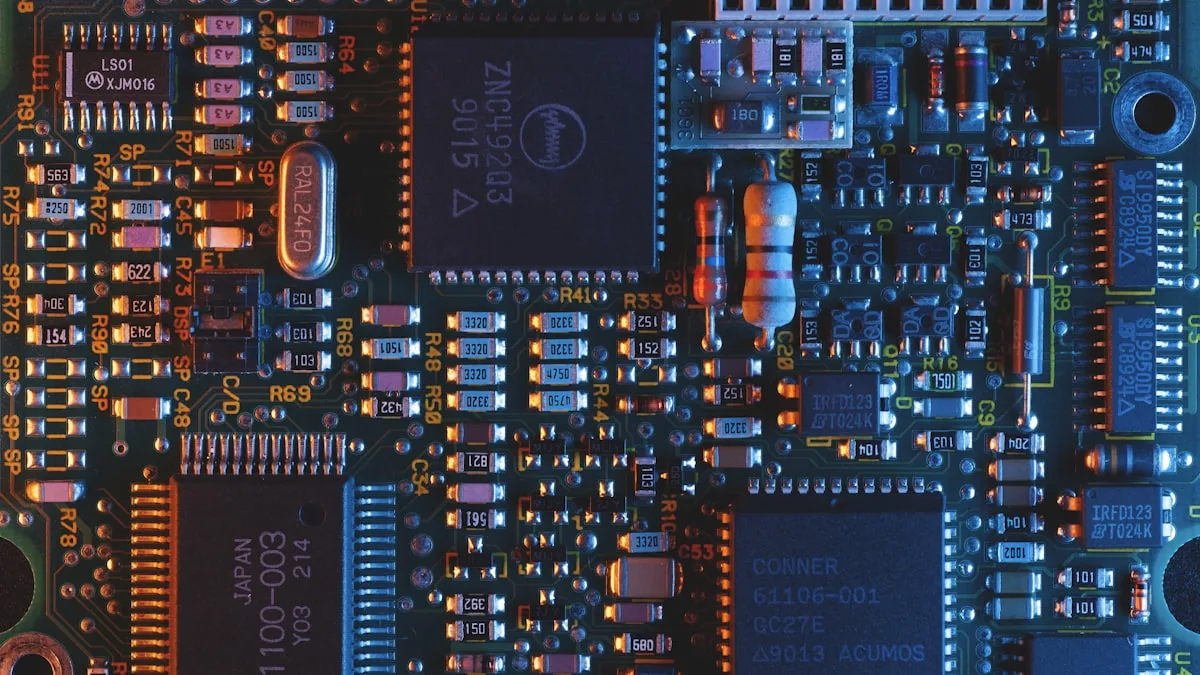
What the Jetson Orin Nano Super Is
The Jetson Orin Nano Super is a developer kit: a small board with an NVIDIA Ampere GPU, an ARM CPU, memory and I/O, designed for embedded and edge AI work rather than desktop use.
The “Super” designation refers to a performance uplift NVIDIA delivered to the Orin Nano platform, raising throughput substantially over the original launch specification. Existing Orin Nano owners received it as a free software update, which is unusual enough to be worth noting.
The Jetson Orin Nano Super’s purpose is running inference on a device: a camera that identifies objects, a robot that navigates, a kiosk that responds to speech. Not training, and not running large language models at conversational speed.
Jetson Orin Nano Super Specifications That Define It
- 1024 CUDA cores and 32 Tensor cores, Ampere architecture
- 6-core ARM Cortex-A78AE CPU at 1.5 GHz
- 8GB LPDDR5 with 102 GB/s bandwidth
- 67 INT8 TOPS of AI performance
- 25W power ceiling
- $249 MSRP, occasionally around $219 at retailers like Micro Center
Two of those numbers matter more than the rest. The 8GB memory pool is the hard capacity wall, shared between CPU and GPU. The 102 GB/s bandwidth is roughly a tenth of a modest discrete card and around a twelfth of what a Mac Studio M5 Ultra offers, which caps token generation speed on anything language-model shaped.
Against that, 25W is remarkable. This is a board you can run continuously on a shelf, in a robot, or off a battery, and CUDA support means the NVIDIA software ecosystem largely works.
What 8GB on the Jetson Orin Nano Super Actually Runs
Realistic expectations, with the caveat that some memory goes to the operating system:
| Workload | Feasible? |
|---|---|
| Object detection (YOLO family) | Yes, this is the core use case |
| Image classification | Yes, comfortably |
| Whisper speech-to-text (small models) | Yes |
| 3B LLM at 4-bit | Yes, modest speed |
| 7B LLM at 4-bit | Tight, slow |
| 13B and above | No |
| Any training | No |
The Jetson Orin Nano Super is a computer vision device that can also run small language models, rather than an LLM device. Framing it the other way around leads to disappointment.
If your goal is local text generation at usable speed, our guides to best local LLMs and how much VRAM you need will point you toward hardware in a different bracket entirely.
Where the Jetson Orin Nano Super Fits
The Jetson Orin Nano Super earns its place in three scenarios.
Jetson Orin Nano Super on-device inference where latency or connectivity rules out cloud. A camera system that must respond in milliseconds, or equipment in a location without reliable networking.
Privacy-constrained deployments. Video that legally cannot leave the premises. Processing locally removes the question entirely.
Learning CUDA and edge deployment. At $249 this is the cheapest legitimate entry into NVIDIA’s tooling, and skills transfer directly upward to larger Jetson modules and desktop CUDA work.
The fourth scenario people attempt, and shouldn’t, is using it as a cheap local LLM server. It will technically run a 3B model. It will not be a satisfying experience compared to almost any alternative.
The Free Upgrade Nobody Mentions
Worth flagging because it is genuinely unusual in hardware.
When NVIDIA introduced the Super performance tier, existing Jetson Orin Nano owners received the uplift through a software update at no cost. Hardware that gets meaningfully faster after purchase without a new SKU is rare, and it suggests the original silicon was conservatively clocked rather than fundamentally limited.
The practical implication for buyers: if you find an older Orin Nano developer kit cheaply on the second-hand market, confirm whether it can be updated to Super performance. The capability gap may be a software version rather than a hardware generation.
Jetson vs Raspberry Pi vs Mini PC
| Jetson Orin Nano Super | Raspberry Pi 5 | Strix Halo mini PC | |
|---|---|---|---|
| Price | $249 | Roughly $80 and up | $1,999 and up |
| AI acceleration | 1024 CUDA cores, 67 TOPS | CPU only, or add-on accelerator | 40-CU Radeon iGPU |
| Memory | 8GB LPDDR5 | Up to 16GB | 64GB to 128GB |
| CUDA | Yes | No | No, ROCm |
| Power | 25W | Roughly 5W to 12W | 65W to 120W |
| Best for | Edge vision, robotics | General computing, light AI | Large local models |
A Raspberry Pi is cheaper and more flexible as a general computer but has no meaningful GPU acceleration. A Strix Halo mini PC runs far larger models but costs eight times as much and draws several times the power. The Jetson Orin Nano Super occupies the narrow band where CUDA acceleration matters and the power budget is tight.
The Software Story
Hardware is half the case for the Jetson Orin Nano Super. The other half is that NVIDIA’s embedded software stack is mature in a way competing edge platforms are not.
JetPack bundles the operating system, CUDA, cuDNN and TensorRT into a single supported release. That removes most of the dependency archaeology that makes embedded Linux painful.
TensorRT is the piece that matters most for real deployments. Converting a trained model to a TensorRT engine can substantially improve inference throughput on the same hardware, and on a device this constrained that difference decides whether a project ships.
CUDA compatibility means skills transfer. Work done here applies to desktop NVIDIA cards and to larger Jetson modules. Nothing learned on this board is wasted if the project grows, which is not true of proprietary edge accelerators.
The community is large and long-running. Jetson has existed for years, so most problems you hit have been documented by someone else. For embedded work that matters more than raw specification.
The counterweight is that JetPack releases lag mainline CUDA, and pinning to NVIDIA’s supported versions is a constraint you accept rather than choose.
Who Should Buy What
| If you are | Start with | Why | Link |
|---|---|---|---|
| Building edge vision or robotics | Jetson Orin Nano Super | CUDA at 25W, purpose-built for this | Check price |
| Learning CUDA on a budget | Jetson Orin Nano Super | Cheapest genuine entry to the ecosystem | Check price |
| Wanting a general-purpose small computer | Raspberry Pi 5 | Cheaper and more flexible without GPU needs | N/A |
| Running local LLMs seriously | Framework Desktop or a discrete GPU | 8GB and 102 GB/s are the wrong tools | N/A |
| Needing more edge performance | Larger Jetson modules | Same software stack, considerably more capable | N/A |
Realistic Project Ideas
Concrete things this board genuinely does well, since specification tables don’t convey much on their own.
A camera that recognises things. Object detection on a live video feed at usable frame rates is the canonical Jetson Orin Nano Super project, and it works. Package delivery detection, wildlife identification, occupancy counting.
Local speech transcription. Whisper’s smaller models run acceptably, which enables a voice interface with no cloud dependency and no per-request cost. Useful for anything privacy-sensitive.
A robot’s perception layer. ARM CPU, GPU acceleration and 25W in one board is close to ideal for a mobile platform where power budget and weight both matter.
Retrieval on a small local corpus. Embedding models are small enough to run comfortably here, so semantic search over a modest document set is feasible even if the generation step happens elsewhere. Our guide to embedding models covers which ones fit constrained hardware.
What all four share is that inference happens on-device, continuously, at low power. That is the specific problem this board solves, and it solves it better than anything else near the price.
What It Won’t Do
Stating the limits plainly, because the CUDA badge sets expectations this board can’t meet.
No training of any consequence. 8GB shared between CPU and GPU rules out anything beyond toy examples. Train on a desktop or in the cloud, deploy here.
No large language models. Anything above roughly 7B is out, and 7B itself is slow enough to be unsatisfying. The 102 GB/s bandwidth is the binding constraint rather than the TOPS figure.
No high-resolution video at high frame rates. Real-time 4K processing pushes past what this tier handles. Larger Jetson modules exist for exactly this reason.
Not a desktop replacement. The ARM CPU at 1.5 GHz is adequate for orchestrating inference and inadequate for general computing. Treat it as an appliance rather than a computer.
Frequently Asked Questions About the Jetson Orin Nano Super
Can the Jetson Orin Nano Super run a local LLM?
Small ones. A 3B model at 4-bit quantisation runs at modest speed, and a 7B is possible but slow. The 8GB memory pool and 102 GB/s bandwidth are the constraints. Treat LLM capability as a bonus rather than the reason to buy.
Is it good for training models?
No. It is an inference device. Training even small models is impractical at 8GB, and the ARM CPU and modest GPU are not built for it. Train elsewhere and deploy here.
How does it compare to a Raspberry Pi with an AI accelerator?
The Jetson’s advantage is CUDA and a genuinely capable GPU sharing unified memory. Accelerator add-ons for a Pi are cheaper but sit outside the CUDA ecosystem, which matters if you want your work to transfer to larger NVIDIA hardware later.
What does the “Super” actually change?
It is a performance uplift over the original Orin Nano specification, delivered to existing owners as a free software update. The board reaches 67 INT8 TOPS at that tier.
Is 25W a real figure?
It is the power ceiling. Actual draw depends on configurable power modes, and lower modes trade throughput for consumption. That flexibility matters for battery-powered deployments.
Should I buy the developer kit or a production module?
The developer kit at $249 includes carrier board and I/O and is the right starting point. Production modules make sense once you have a working prototype and need to deploy at volume in a custom enclosure.
Verdict
The Jetson Orin Nano Super is the best cheap entry into edge AI, and at $249 with CUDA support and 25W power draw it has essentially no direct competition. For computer vision, robotics, and any deployment where inference must happen on the device, it does exactly what it should and the software ecosystem is mature.
The honest caveat is that 8GB and 102 GB/s put a firm ceiling on ambition. This is not a small local LLM server, whatever its CUDA badge suggests, and buyers arriving from the local language model world will find it underpowered for that purpose. Buy it for vision, robotics, or learning the NVIDIA embedded stack, and it is excellent. Buy it expecting a pocket-sized chat machine and it will disappoint.
Concrete next step: before ordering, identify the specific model you intend to deploy and check its memory footprint against 8GB with the operating system’s overhead subtracted. If it fits with room to spare, this board will serve you well for years. If it is marginal, the next Jetson tier up will save you a rebuild.
Sources and Further Reading
- NVIDIA Jetson Orin official page, manufacturer specifications across the Jetson Orin family
- NVIDIA Jetson developer documentation, module comparisons, power modes and deployment guidance
- JetsonHacks, long-running independent community resource with hands-on Jetson testing
- Ultralytics YOLO documentation, the object detection models most commonly deployed on this hardware
- llama.cpp repository, quantised model support including ARM and Jetson builds
For related coverage on this site, see our best GPUs for local AI ranking for desktop alternatives, how much VRAM you need for understanding the 8GB ceiling, the GMKtec EVO-X2 review for a mini PC with far more capacity, and best local LLMs for models that suit constrained hardware.